Choose a puzzle
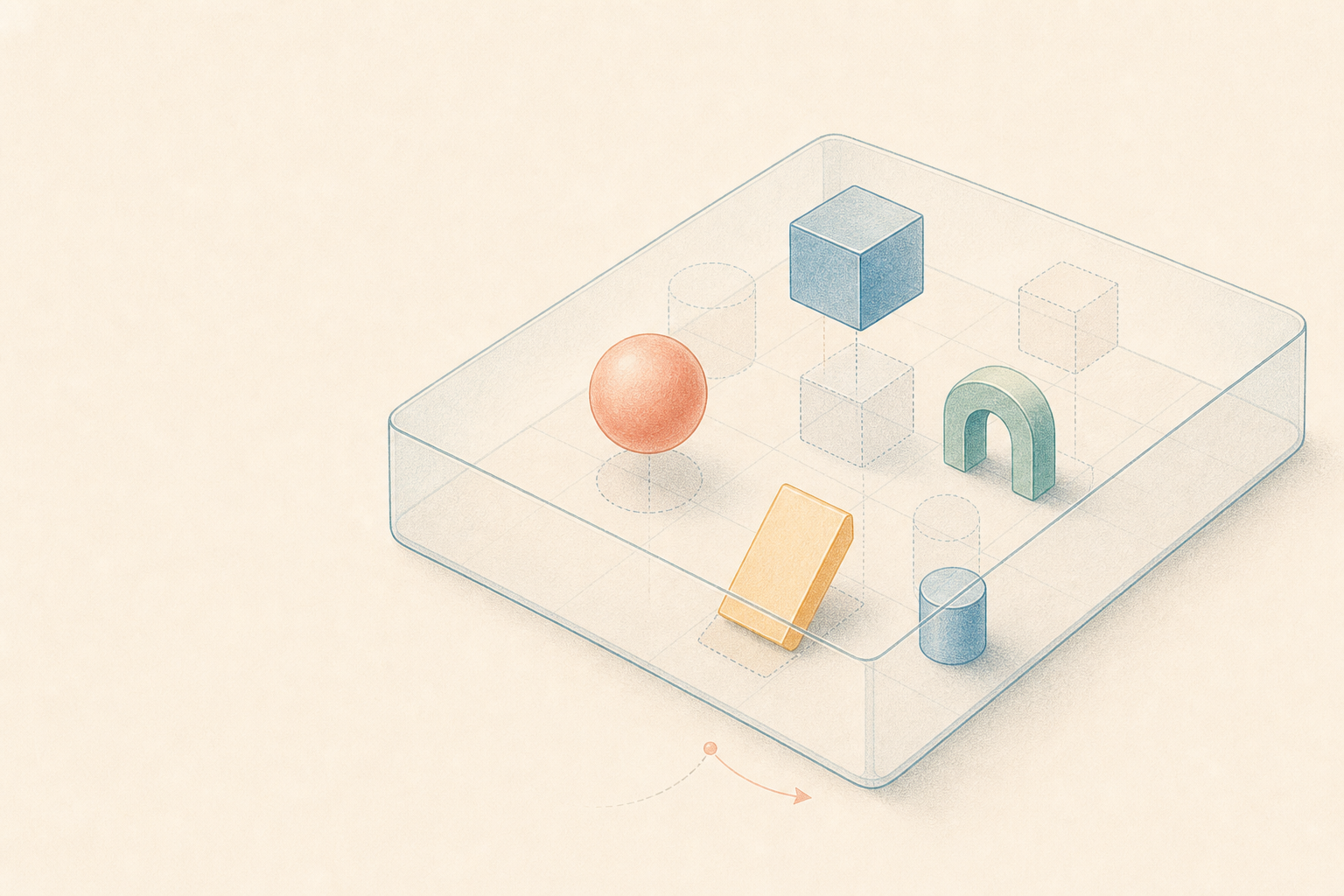
Each puzzle starts with a board shape and a small set of block pieces.
Free block-fill puzzles for children to explore shape, space, and planning—one calm puzzle at a time.
How it works
Choose a board, fit the pieces, fill every space.
Each puzzle starts with a board shape and a small set of block pieces.
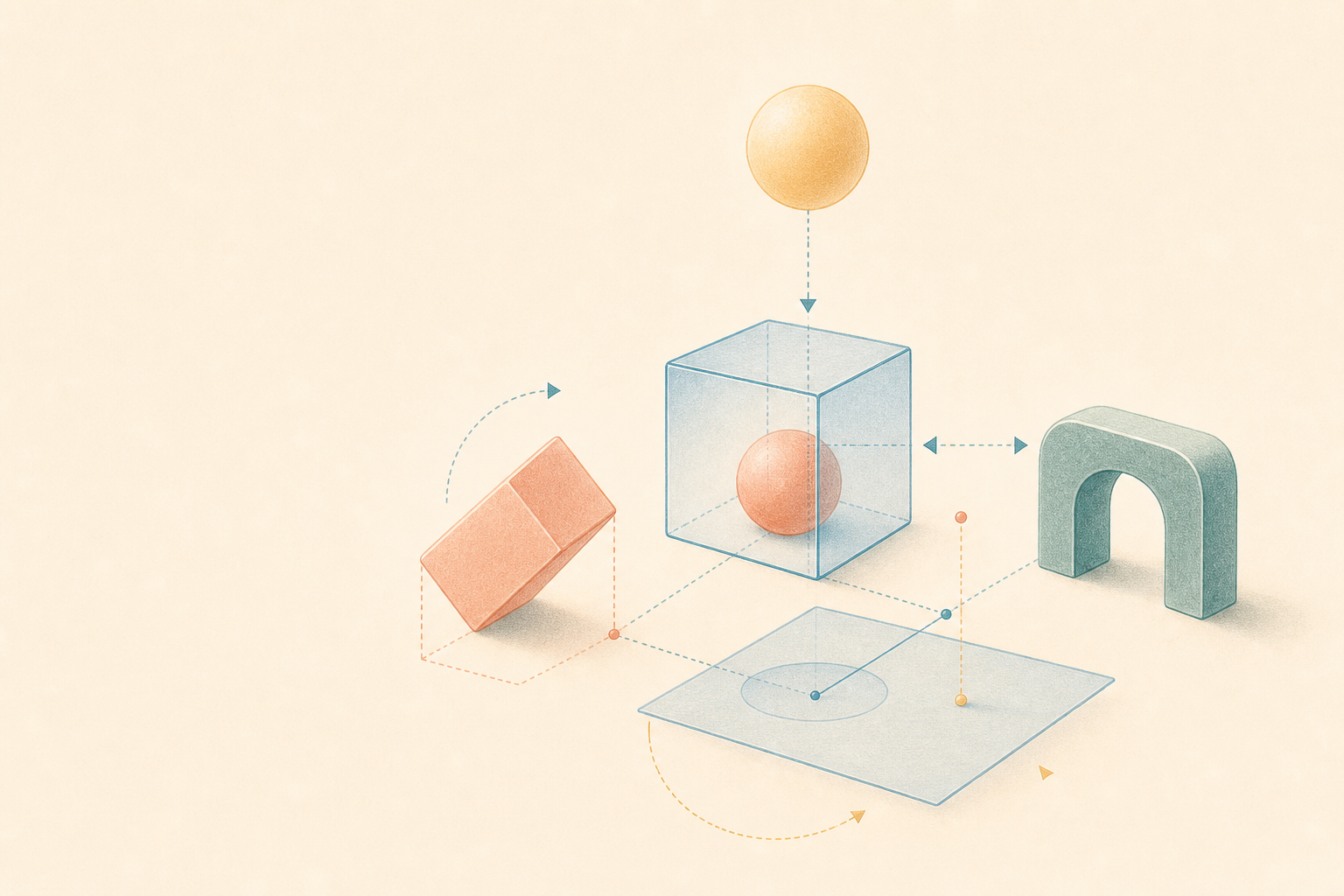
Children rotate and compare pieces until the shapes fit the open spaces.
The goal is simple to understand: every space is filled without extra pressure mechanics.
Why spatial reasoning matters
Evidence-backed notes for parents, translated into plain language.
Children meet spatial thinking when they compare position, relation, movement, and scale: where a piece sits, how it meets an open space, what changes after a turn, and what remains on the board.
At home: watch one visible relationship before giving a hint or moving the piece.
Read noteResearch reviews suggest spatial skills can respond to practice, but the safe home takeaway is smaller: give children repeated, visible chances to compare a piece, turn it, inspect the board, and try again.
At home: keep the next try small, visible, and easy to compare.
Read noteWords such as turn, beside, edge, corner, inside, and open can help parent and child look at the same visible relationship on the puzzle board without turning puzzle time into a lesson.
At home: use one spatial word, then wait for the child’s move.
Read noteA stuck moment can mean the board is asking a child to hold too much at once: the piece shape, the open space, the direction it might face, and the next possible try.
At home: reduce the board to one piece and one open space.
Read noteFree Puzzle Path
Four age paths help you choose a starting point. Always free: no sign-up, no timers, no pressure.
Parent-guided block matching and first turns.
Independent play with rotation, fitting, and more shapes to compare.
Planning-focused puzzles with more open-space matching.
Denser boards for several-step planning and harder fits.
Paid age paths · parent purchase
Choose one age path for more room to practise, return, and make new puzzles together.
Pilot access · $2.99 one-time
Gentle, hands-on puzzle practice for children beginning their spatial path.
New spatial puzzles for children ready to combine, turn, and test ideas.
More room for planning, trying another route, and revisiting a tricky fit.
Open-ended puzzle practice for children who want to plan and make a challenge.
Learning Journal
Position, direction, and shape words appear in ordinary family routines. Notice them together without turning conversation into a lesson.
Make the next try visible: compare the shape, the open space, and the new direction.
Fold, predict, open, and compare — one sheet of paper is enough to begin.
See position, shape, route, and order in packing, building, and everyday family moments.